
(March 27, 2026)
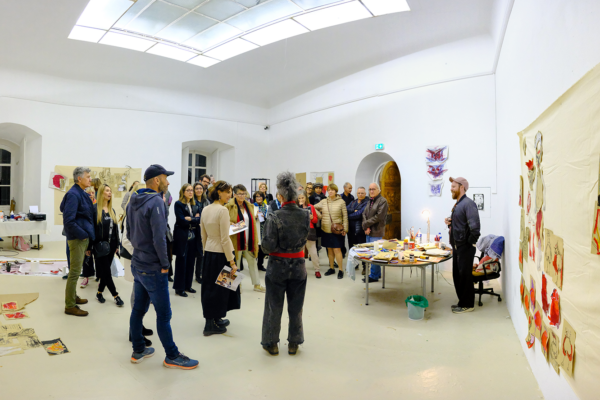
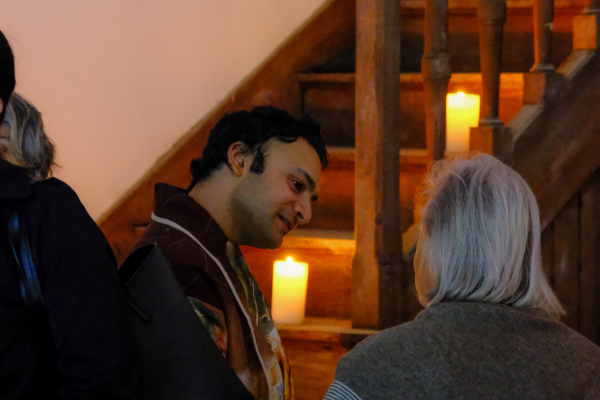
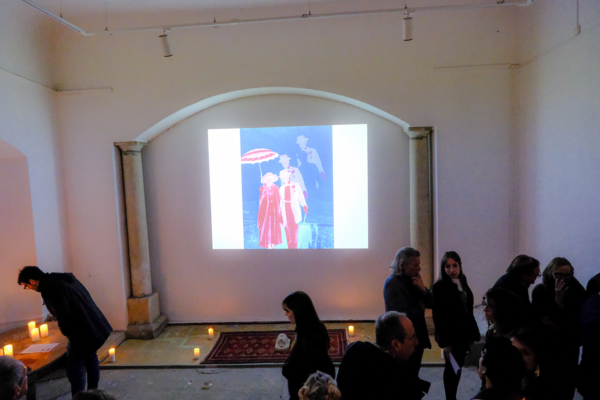
On March 27, the Château de La Napoule opened its studios to the public for the Spring International Residency Open Studio.
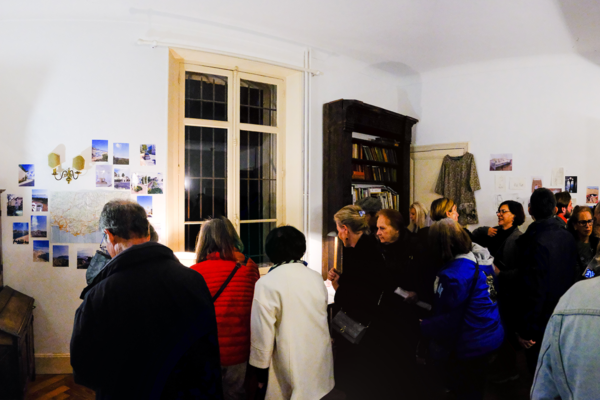
Conceived as a journey through the Château’s spaces, the evening invited visitors to encounter works in progress, at the intersection of personal narratives, formal research, and dialogue with the site.
Jamal Ouazzani: breath, language, and resistance
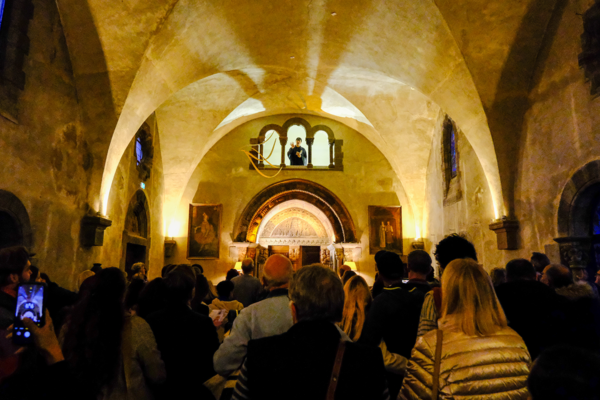
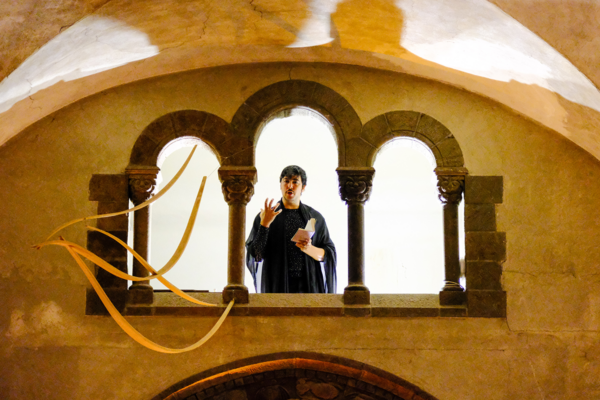
The evening opened in the dining room with a reading by Jamal Ouazzani, who shared excerpts from his poetry collection Feux de joie.
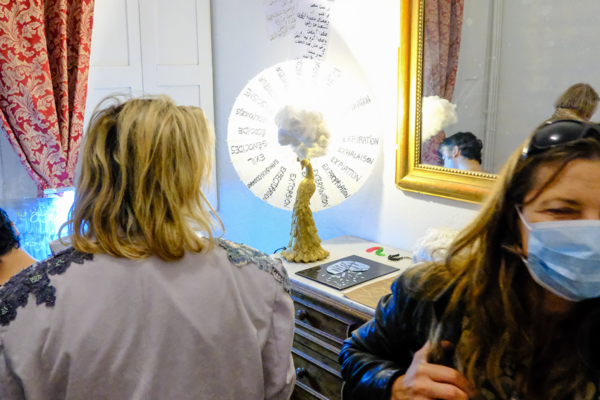
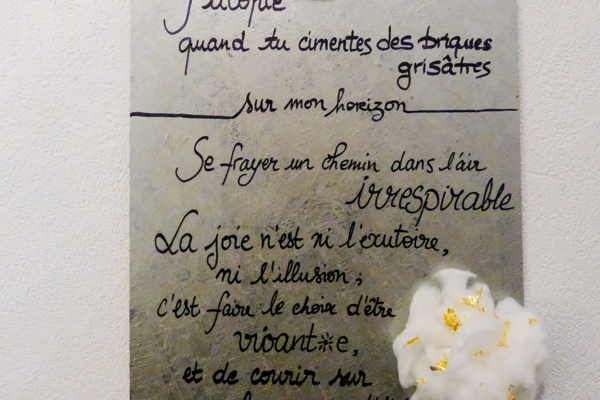
His practice explores breath as both a vital and political space. Through his project Pneumapoetics, he reflects on the conditions of respiration, between constraint, suppression, and the necessity of expression.
In his studio, he presented an immersive experience: a deliberately confined space where masks, strong scents, and textures created a sense of physical discomfort. Visitors were invited to move through this space as an embodied experience of constraint, before leaving a written trace of their feelings. The evening concluded with a second reading, forming a circular gesture in which language once again opened a shared space.
Maya Seas: inhabited landscapes and narratives of identity
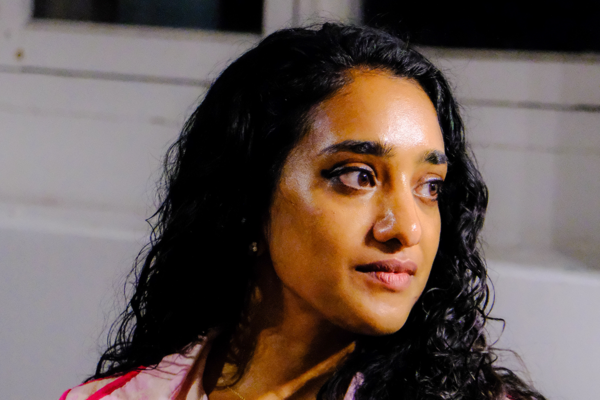
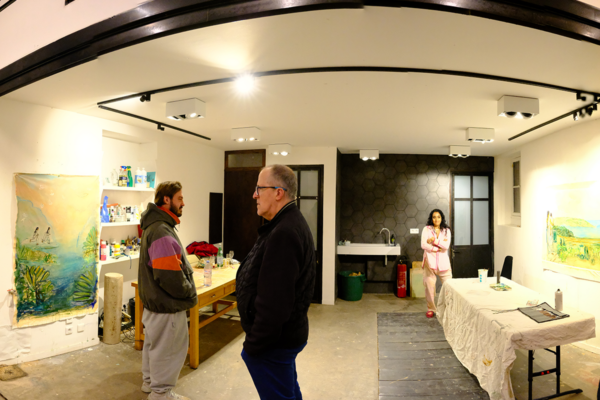
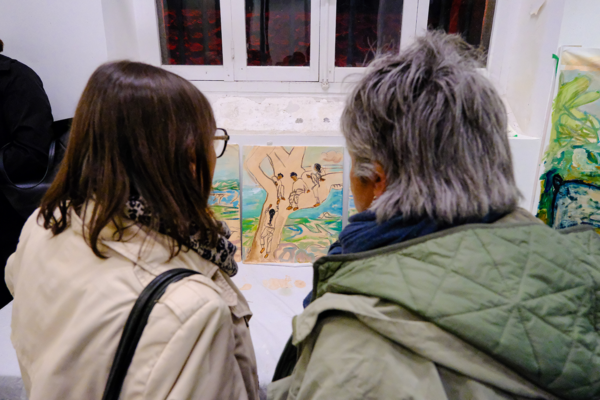
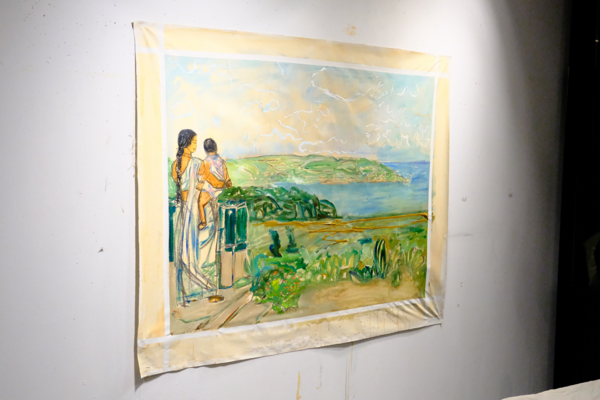
Maya Seas presented a series of paintings developed during her residency, inspired by Mediterranean and coastal landscapes.
Her compositions bring together figures and environments, unfolding narratives related to identity, migration, and family dynamics. The characters, often situated within open and luminous spaces, appear both rooted and in motion.
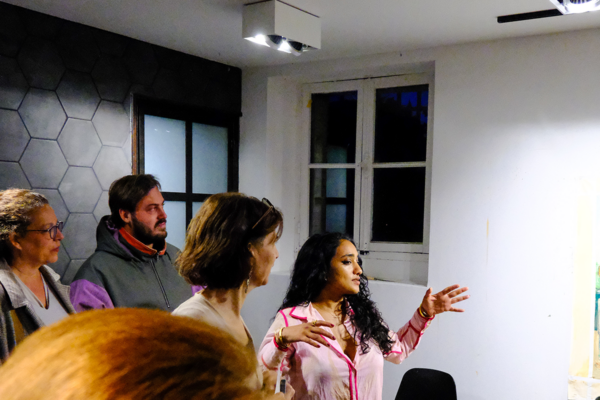 Maya Seas' studio | photo: Laurent Barnavon
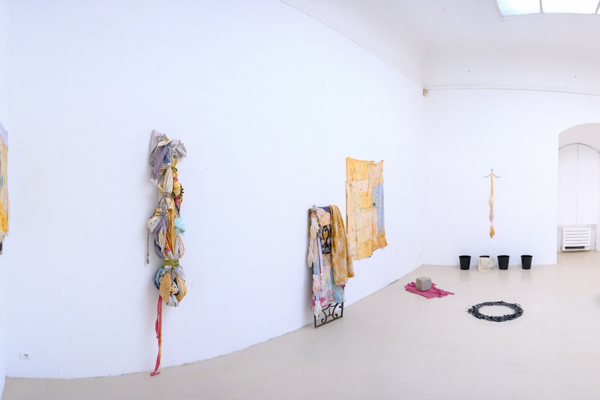
Jennifer Jones: textiles, memory, and inherited gestures
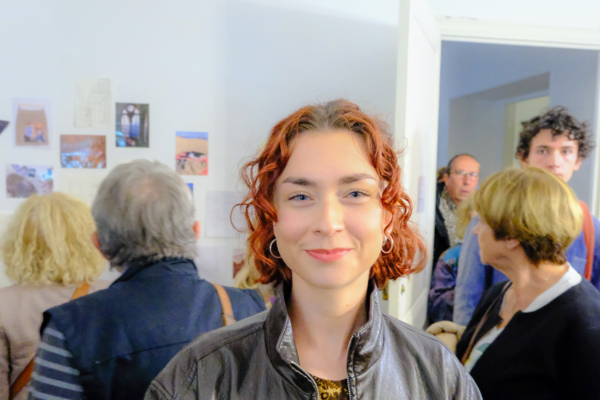
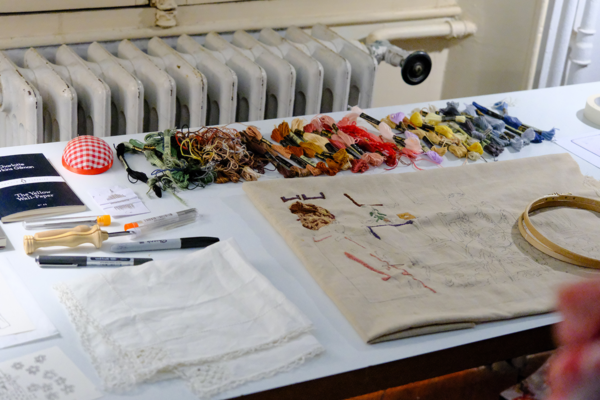
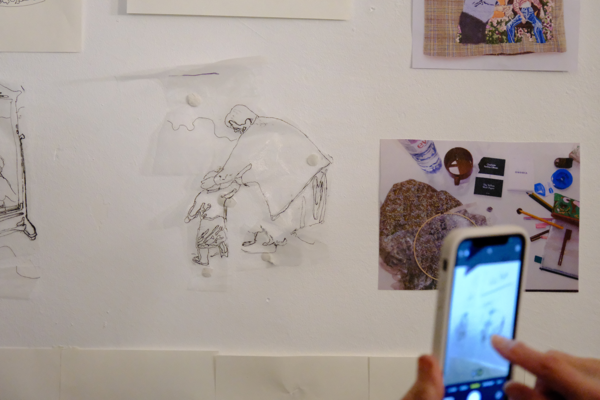
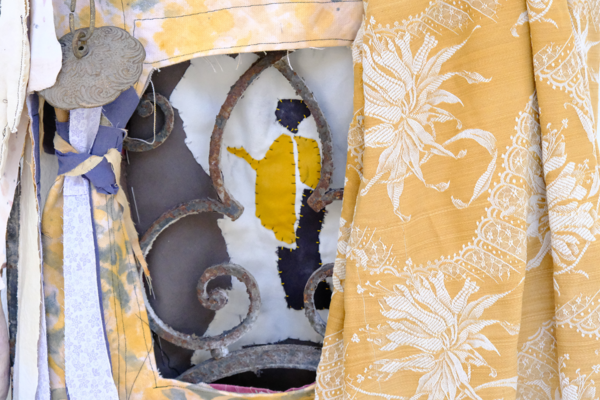
Through sewing and embroidery, Jennifer Jones develops a practice rooted in memory and temporality.
Working with reclaimed materials—garments, domestic fabrics, and furniture—she creates layered compositions where personal and familial histories intersect. Textile gestures become both narrative tools and reflections on assigned roles, particularly those related to women.
Kate Bae: archives, material, and thresholds
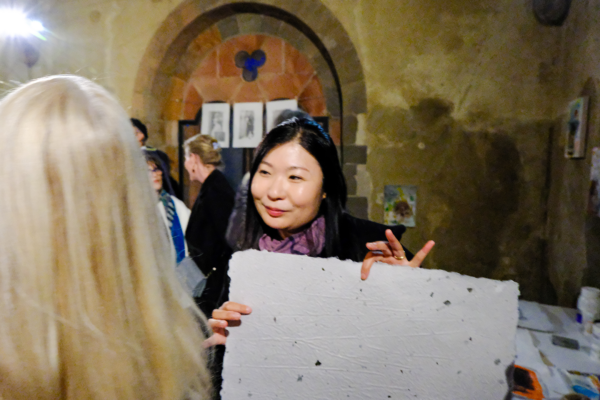
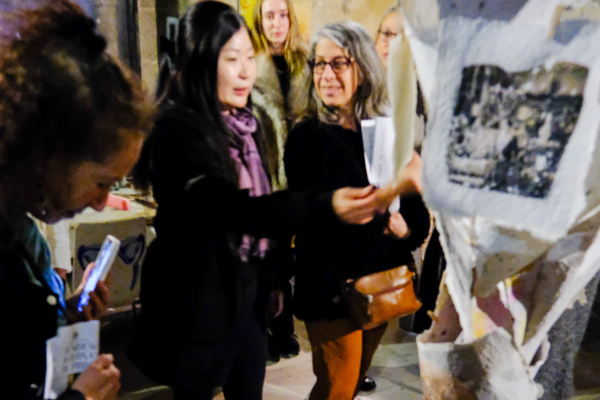
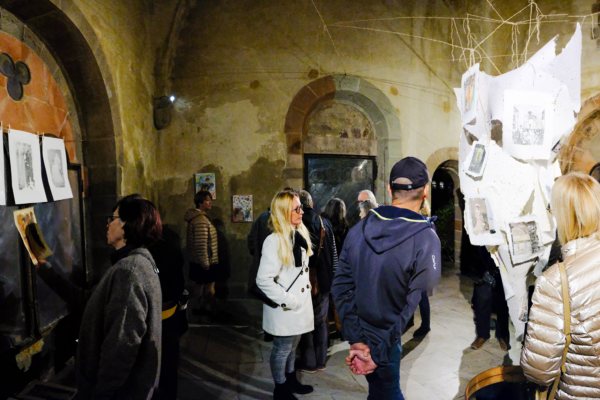
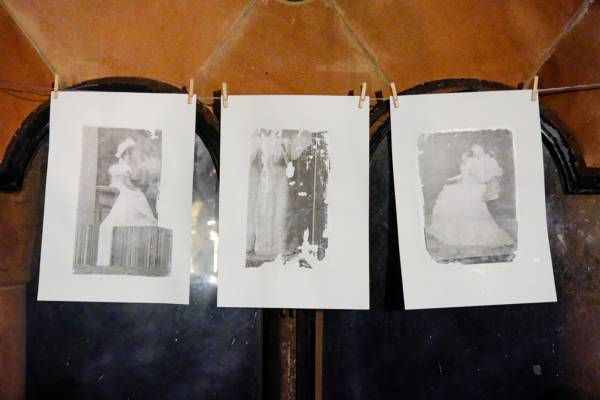
In a space between the crypt and the Room of Souls, Kate Bae presented an immersive sculptural installation.
Drawing from archival images, particularly those of Marie Clews, she created a suspended form using handmade paper and transferred imagery. The work evokes a threshold, a passage between temporalities.
Shagha Ariannia: roots, satire, and displacement
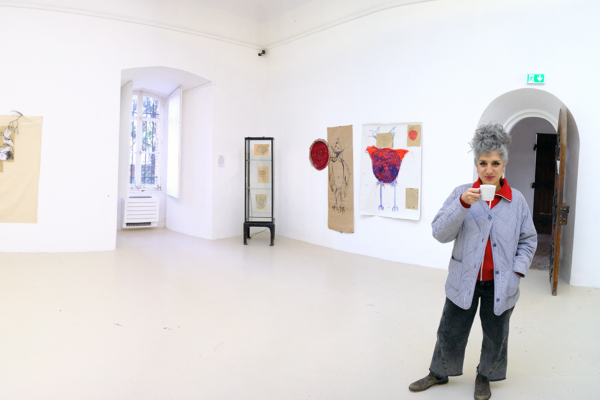
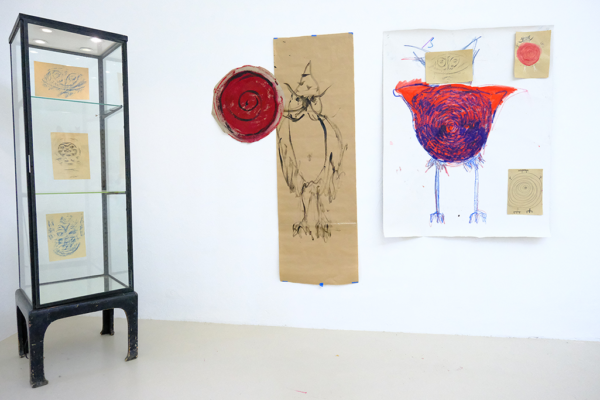
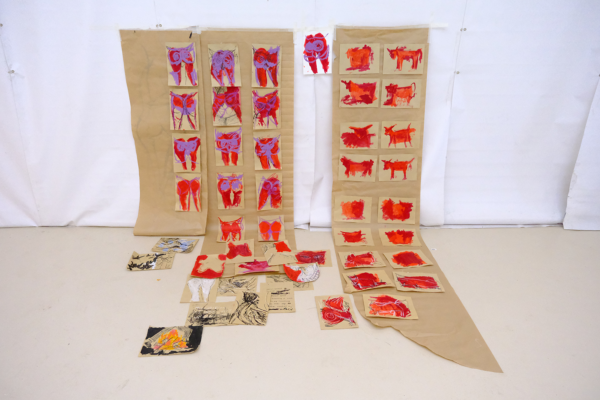
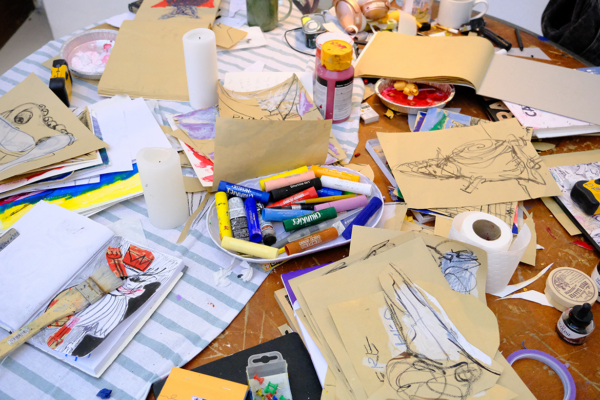
Shagha Ariannia’s work combines painting, drawing, and critical inquiry.
Continuing her project around Ubu Roi, she develops a satirical perspective on contemporary political dynamics, while grounding her work in vegetal motifs. Roots become metaphors for origin, displacement, and identity.
Anne-Laure Cano: body, constraint, and the memory of gesture
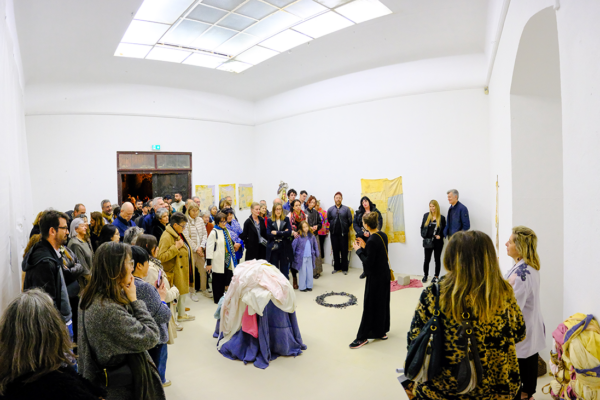
Anne-Laure Cano presented a textile installation composed of reclaimed fabrics, shaped through twisting, binding, and constraint.
Inspired by the figure of the washerwomen, her work explores repetitive gestures, invisible labor, and the traces left on bodies. The materials carry both physical and social memory.
Taha Ahmad: fiction, archive, and mysticism
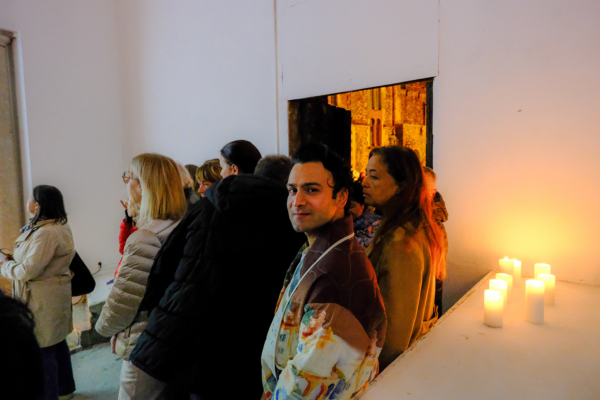
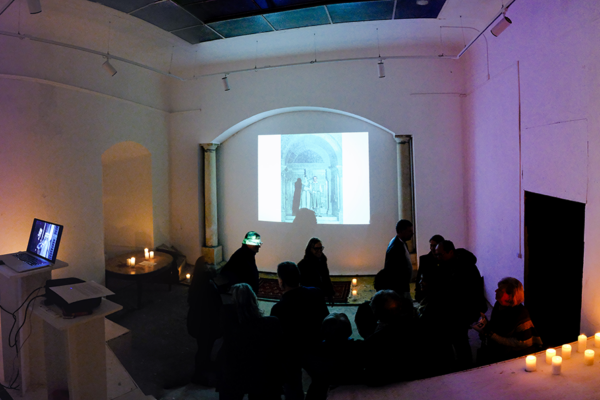
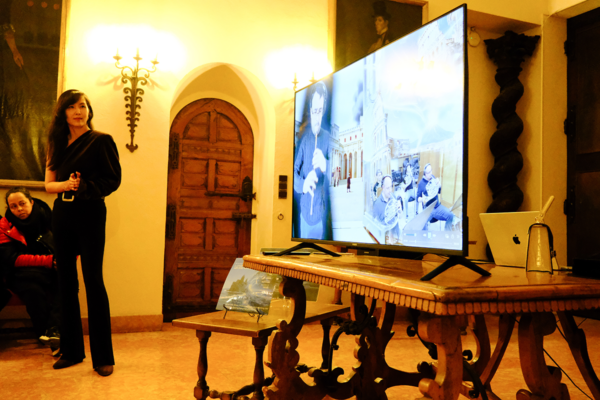
Through a video constructed from archival imagery, Taha Ahmad offered a reinterpretation of the Château.
His project imagines the return of Henry Clews in a fantastical form, within a world populated by hybrid figures and mystical references. The work blurs the boundaries between history and fiction.
Wendy Chen: translating, traversing, resonating
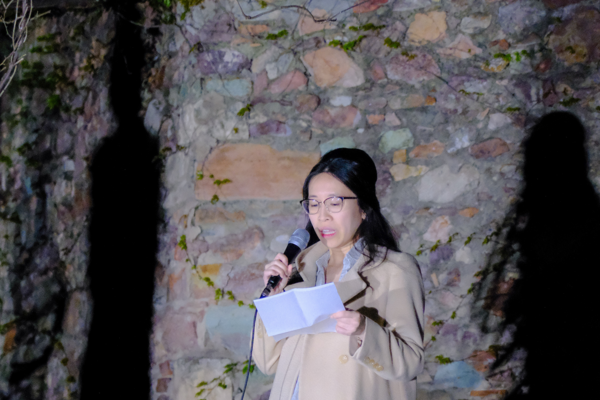
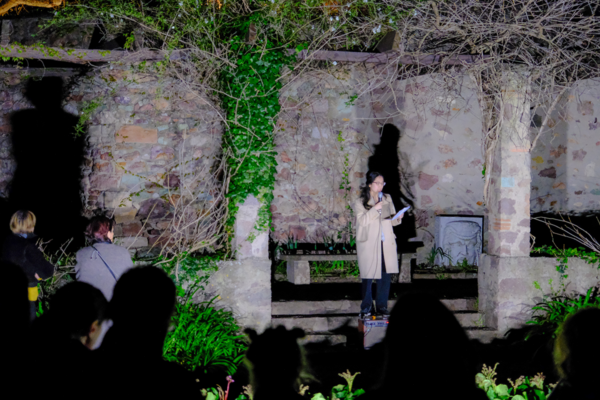
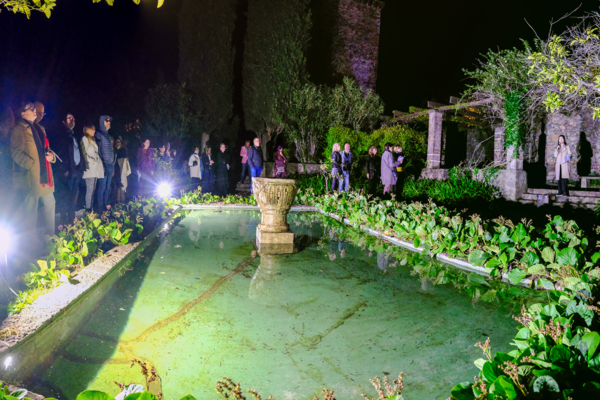
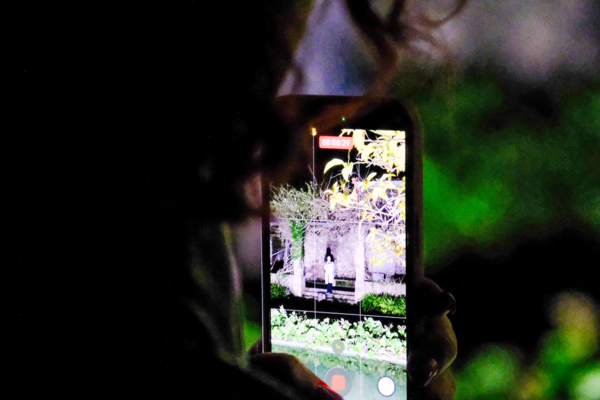
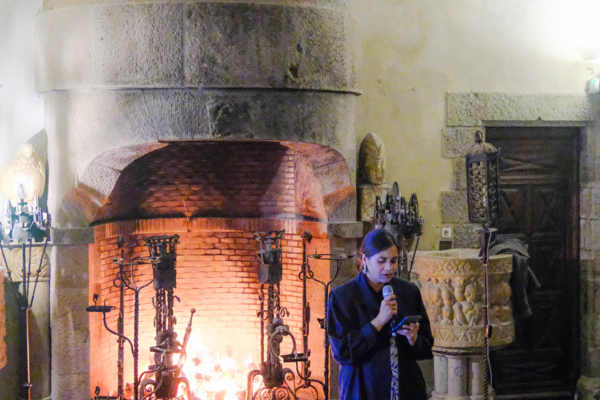
In the Château gardens, Wendy Chen presented a reading of her translations of the poet Li Qingzhao.
Her work approaches translation as a space of transformation and resonance, where voices from the past meet contemporary writing. The landscape itself became a space of listening.
Yang Zhang: composition and sonic space
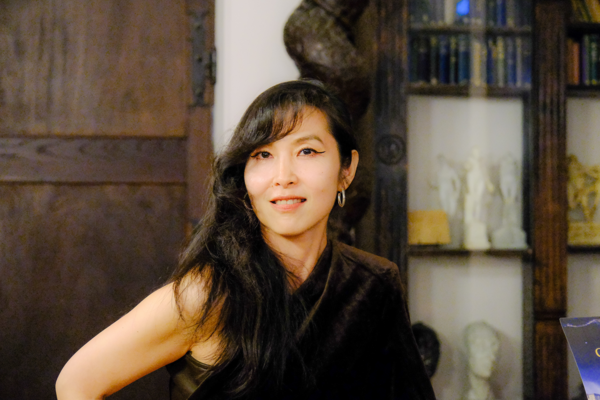
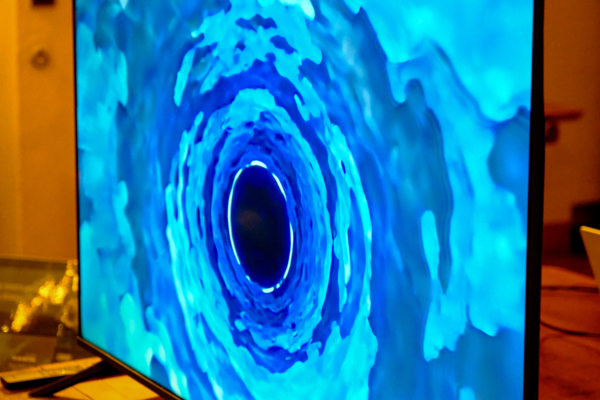
Yang Zhang presented a sound composition developed during her residency.
Inspired directly by the Château, her work translates spatial experience into sound, where architecture and perception become compositional elements.
Sukanya Deb: horizon, perception, and landscape
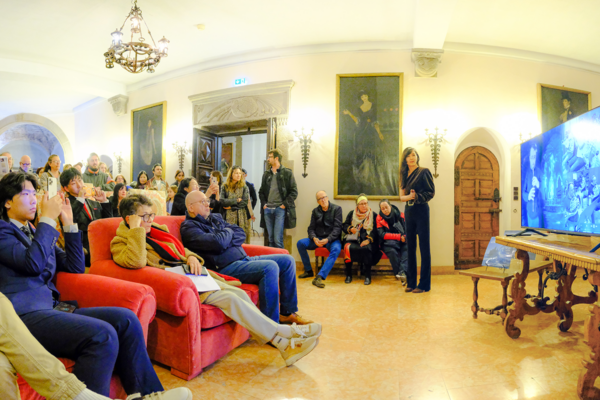
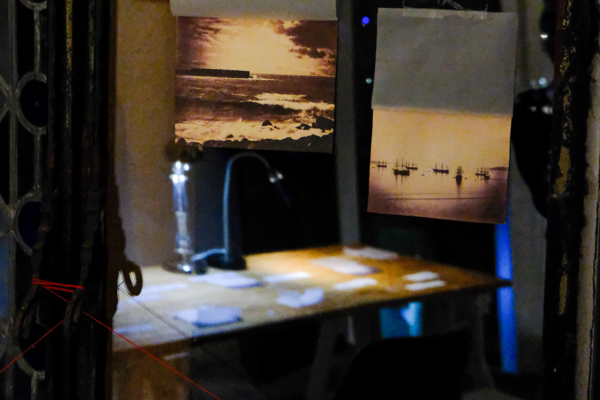
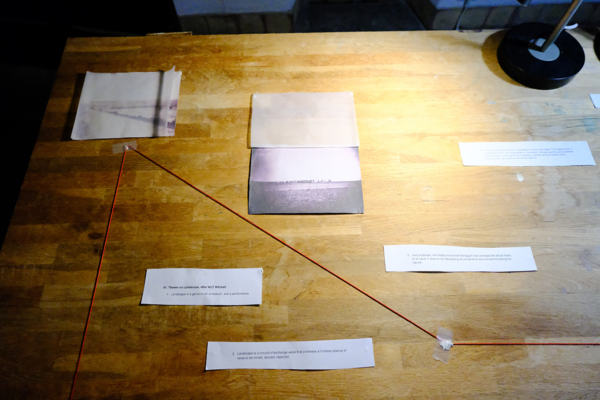
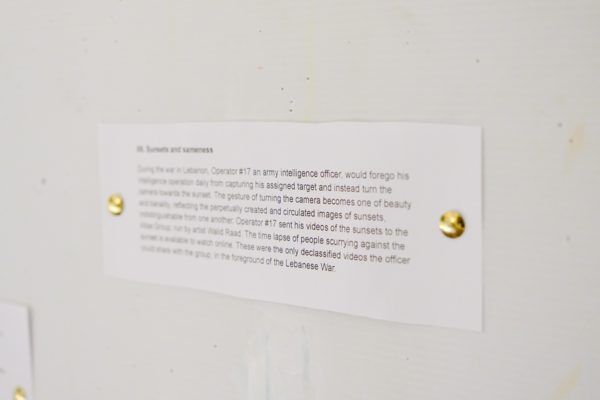
Sukanya Deb developed a photographic research project centered on the horizon line, inspired by 19th-century landscapes.
Her installation offered a visual journey through the Château, where repetition and framing gradually construct a perception of the landscape.
A shared moment
The evening concluded in the dining room around a convivial buffet, extending conversations between artists and visitors.
For a few hours, the Open Studio offered a vivid and sensitive glimpse into artistic practices in progress, between experimentation, research, and encounter.
![[Icon]](https://www.lnaf.org/wp-content/uploads/2021/04/icon-footer-panel@2x.png)
15 replies on “International Spring Residency 2026 – Open Studio”
orlistat canada reddit
orlistat canada reddit
get vardenafil online
get vardenafil online
cialis generico online
cialis generico online
domperidone bnf lactation
domperidone bnf lactation
priligy 30mg qatar
priligy 30mg qatar
semaglutide pillen belgie
semaglutide pillen belgie
doxycycline for acne vulgaris dose
doxycycline for acne vulgaris dose
tadalafil cialis generic
tadalafil cialis generic
ketorolac tromethamine description
ketorolac tromethamine description
minoxidil 2% vs 5% potency comparison
minoxidil 2% vs 5% potency comparison
how sildenafil works
how sildenafil works
avanafil molecular mechanism
avanafil molecular mechanism
vardenafil food interaction explanation
vardenafil food interaction explanation
avanafil pricing review
avanafil pricing review
augmentin vs amoxicillin clinical differences
augmentin vs amoxicillin clinical differences