
(May 2026)
On May 1st, the artists of the Canadian Spring Residency opened the doors of their studios to the public for an Open Studio conceived as a journey through practices, narratives, and experimentation.
Spread throughout the various spaces of the Château de La Napoule, the exhibition route invited visitors to move from one universe to another: sound installations, performances, textile research, photography, writing, sculpture, and material-based experiments echoed one another without ever attempting to create a single narrative.
From one studio to the next, however, several recurring themes emerged throughout the works presented: memory, transformation, transitional spaces, the relationship between body and landscape, and sensitive forms of presence.
Jordan Nobles: Listening to the Resonances of the Château
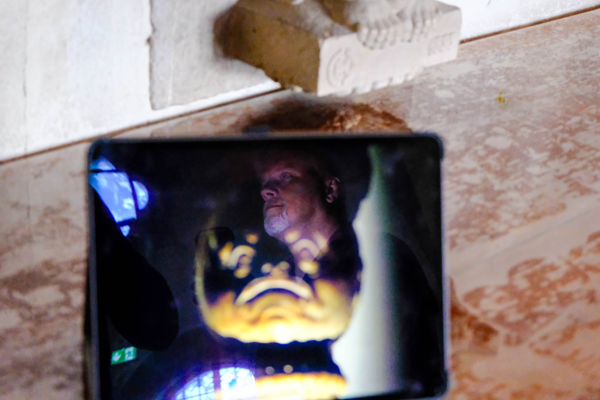
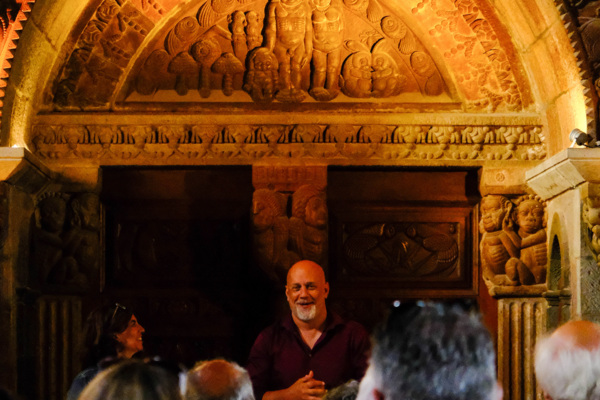
Following a welcome drink in the Château courtyard, the evening began in the large Gothic dining room with a presentation by composer Jordan Nobles.
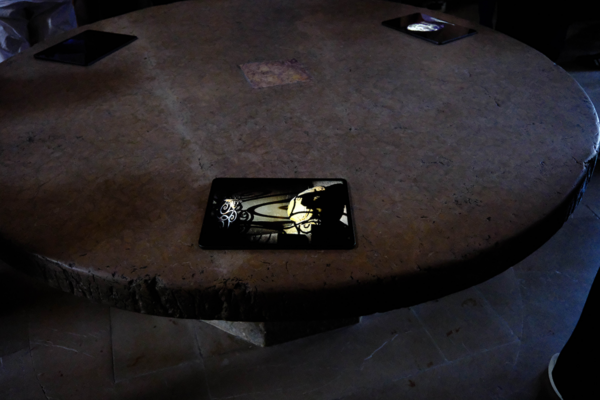
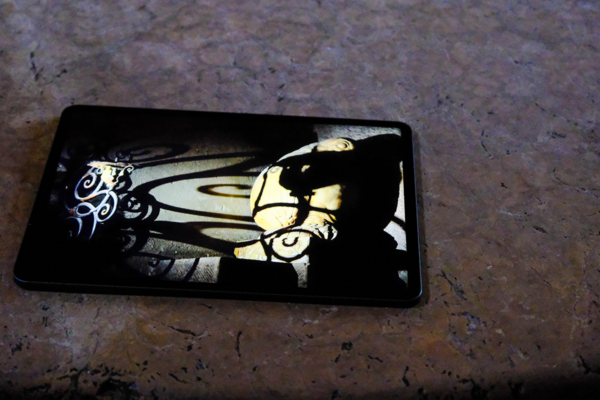
Several tablets scattered throughout the room played compositions created during the residency, accompanied by filmed images of the Château. Henry Clews’s sculptures, architectural details, and fragments of spaces appeared through shifting plays of shadow and light, creating an atmosphere that felt both contemplative and mysterious.
Gradually, visitors were invited to pay attention differently to resonances, silences, and forms that seemed to emerge from the darkness.
Katia Gosselin: Light, Landscape, and Sensitive Memory
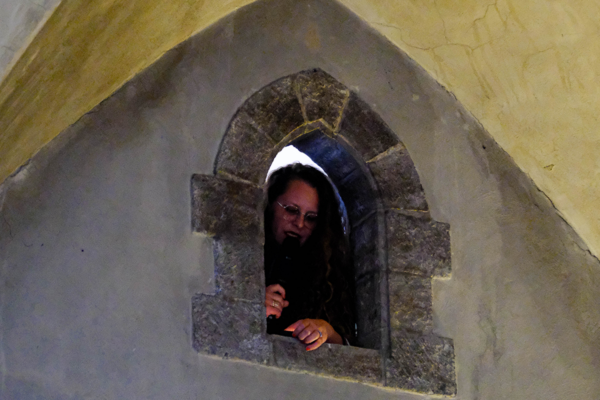
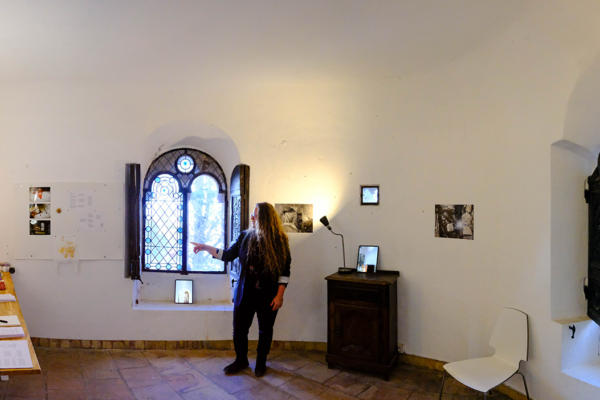
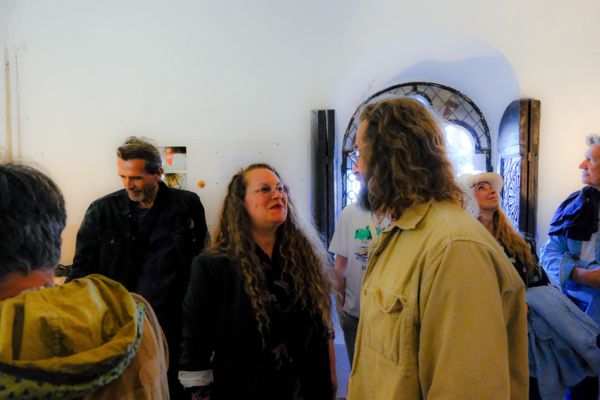
From the Gothic dining room, visitors were then invited to climb in small groups to Katia Gosselin’s studio tower overlooking the sea.
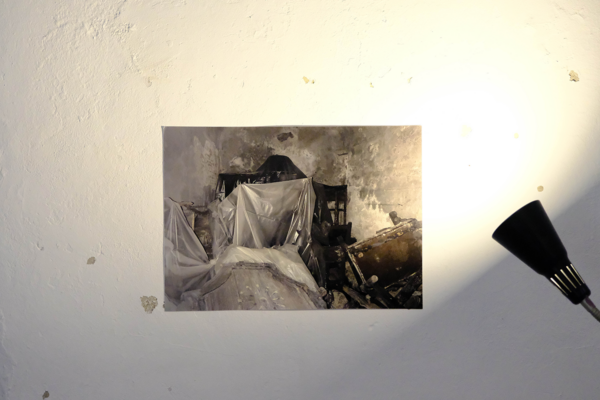
Using text as the starting point of her research, the artist presented a series of videos, photographs, and sound fragments created during the residency. Displayed across several tablets scattered throughout the space, her “video-photographs” captured the shifting reflections of light on the sea through the Château’s windows and across the surfaces of her studio.
As texts written during the residency resonated throughout the space, the installation brought forward questions related to the memory of landscapes, their disappearance, and what the artist describes as a form of “solastalgia” — a distress caused by the transformation or loss of a familiar environment.
Light, voices, and suspended images transformed the studio into a space inhabited by the sensitive traces of the surrounding landscape.
Arjun Lal: Performance, Identity, and Hybrid Figures
The visit continued with the discovery of Arjun Lal’s studio, located in the “tower of the tombs” above the space where Henry and Marie Clews are buried.
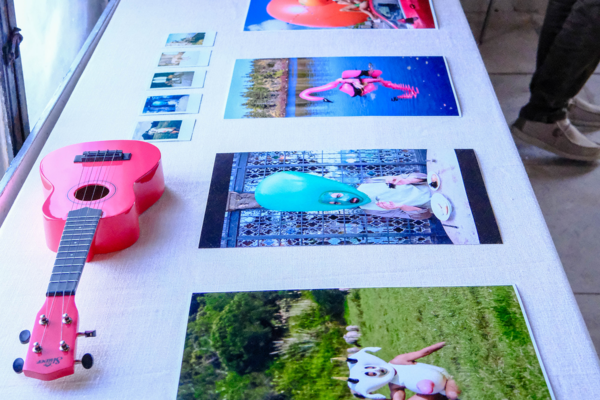
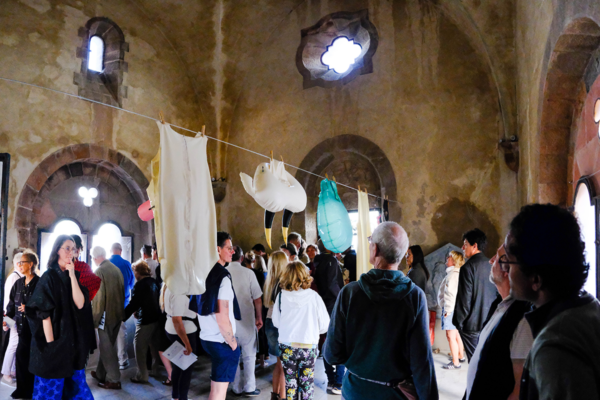
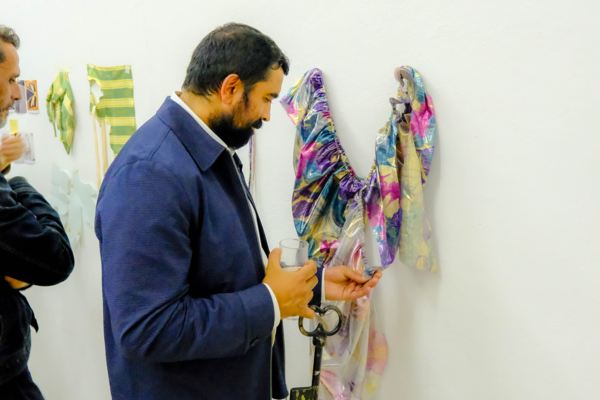
The artist presented several costumes created during the residency, used throughout performances and explorations carried out in and around the Château. Inspired by queer cultures, latex, and certain aesthetics associated with fetishism, his work deliberately diverts and reinterprets the imaginaries often linked to these worlds.
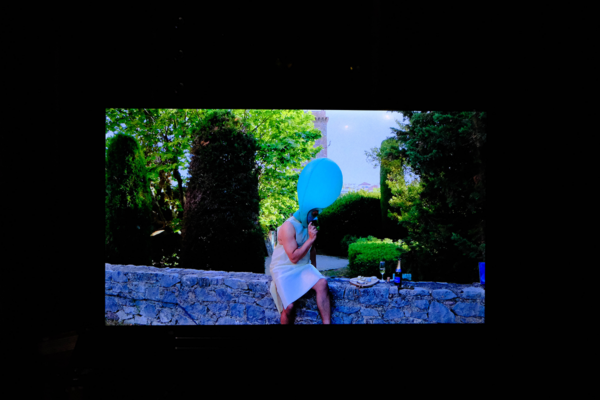
Cow, alien, or flamingo: the figures appearing in his photographs and videos oscillated between humor, strangeness, and performance. In one of the videos shown in the dining room, the artist notably appeared in the Château gardens dressed in an alien costume while enjoying red wine and cheese.
Suspended objects, performative images, and residency narratives transformed his studio into a space of experimentation that felt intimate, curious, and profoundly free.
Valérie Forgues: Writing, Grief, and the Presence of the Absent
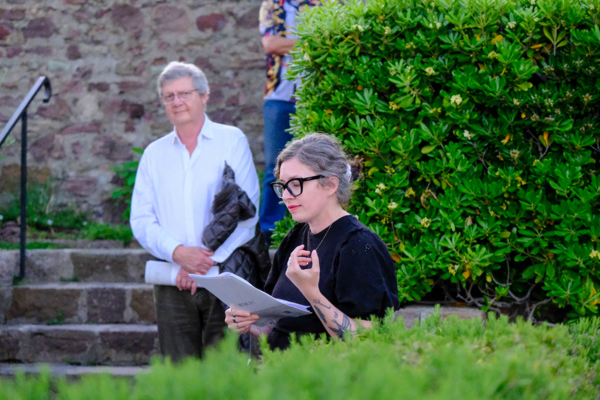
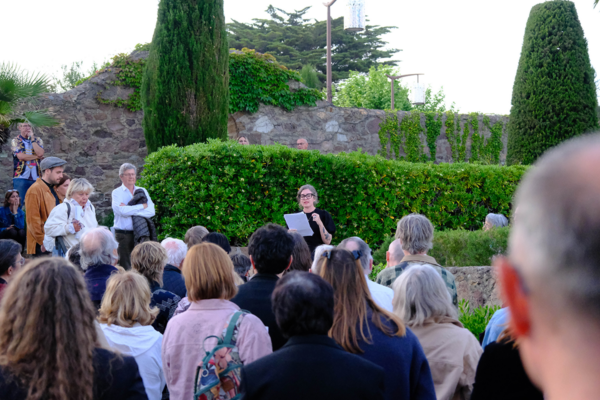
The evening then continued in the Château gardens with a reading by author and poet Valérie Forgues.
In front of the tower of the tombs, the artist shared an excerpt from her current book project, a nonfiction text shaped by themes of grief, memory, and disappearance.
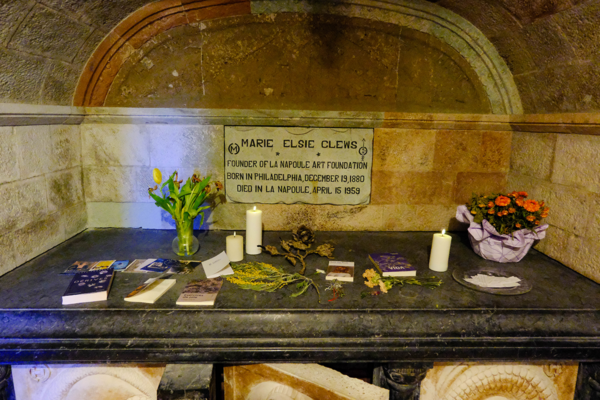
After the reading, visitors who wished to do so were invited to descend into the Clews tombs. On Marie Clews’s tomb, Valérie Forgues had arranged various books, objects, and text fragments that accompanied her work throughout the residency.
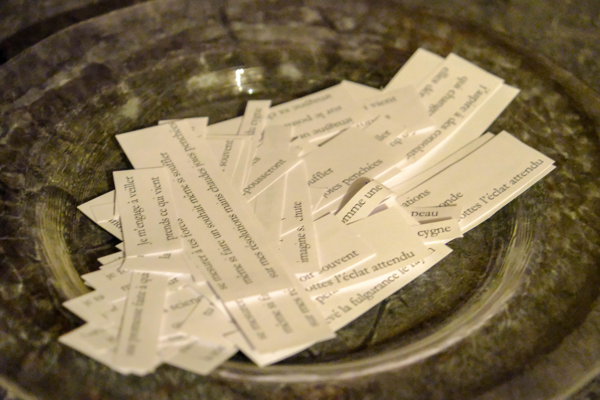
Some passages from the text read in the gardens reappeared there as printed fragments, which visitors were invited to take with them. Both a public reading and a space for contemplation, the installation extended the themes of the text into the site itself.
Sheilah ReStack: Interstices as Spaces of Memory
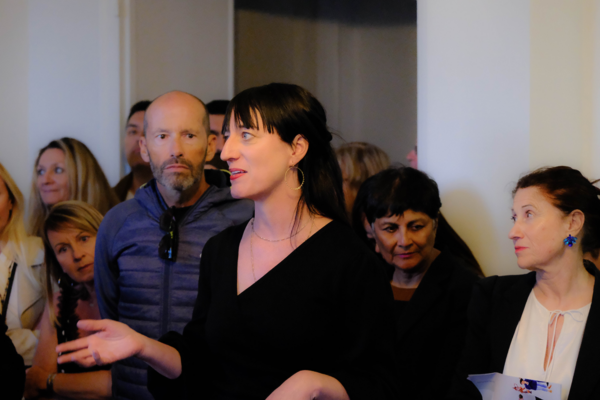
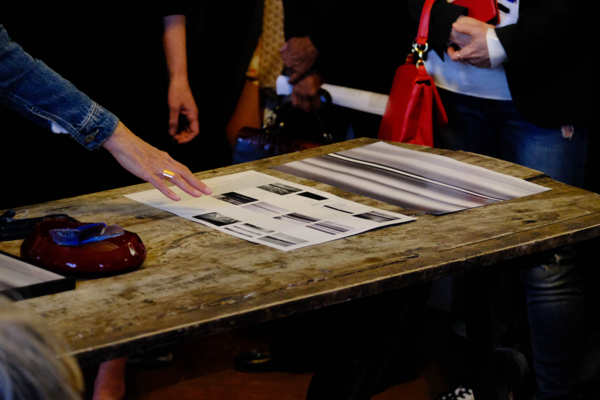
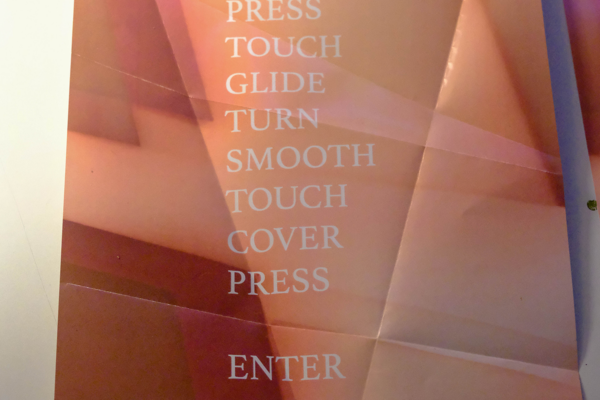
At Villa Marguerite, artist Sheilah ReStack presented a body of research directly inspired by her experience of the Château and its history.
Deeply affected by the discovery of Henry and Marie Clews’s tombs — whose doors were intentionally left slightly ajar to allow their spirits to circulate — the artist began cataloguing the interstices, cracks, and spaces throughout the Château that refuse to fully close.
These “cracks,” which she numbered and documented, became symbolic passageways inhabited by invisible or peripheral narratives.
The first of these spaces was a fireplace door in her studio that never completely shut. Sheilah ReStack created a plaster cast of it before producing various photographic images connected to the architecture of the site.
Adolfo Ruiz: Reading the Forms of the Landscape
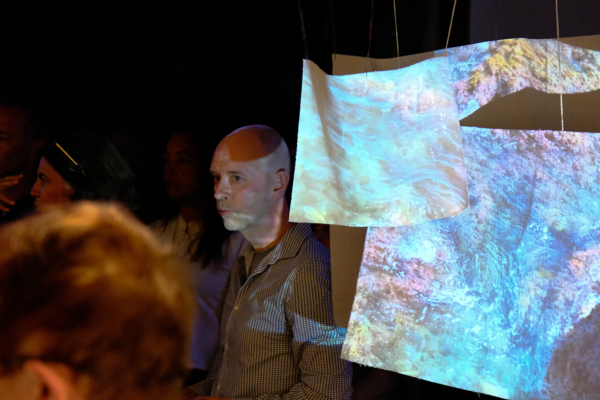
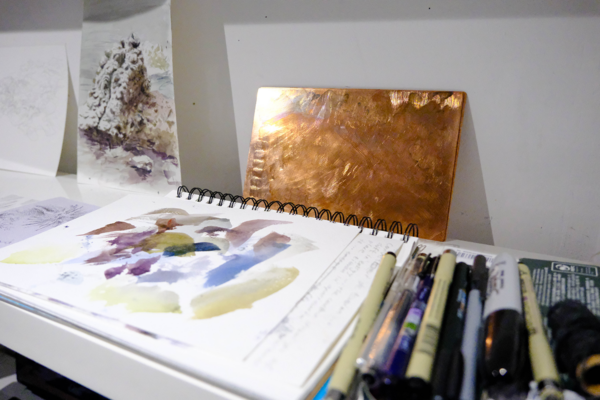
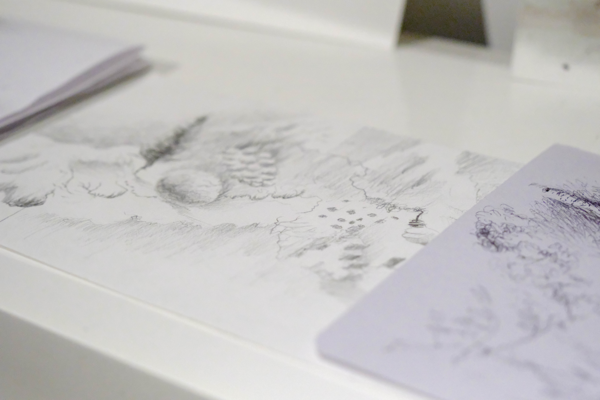
In his studio, Adolfo Ruiz presented a body of research situated between abstraction and figuration, inspired by the Mediterranean coastline and the rock formations of the Estérel mountains.
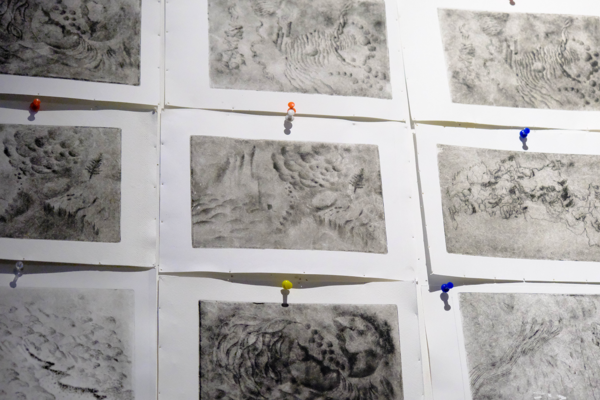
Through watercolor, drawing, engraving, and various printing techniques, the artist explored the textures, rhythms, and motifs present in rocks, the sea, and the surrounding reliefs.
His compositions, made of layers, imprints, and organic forms, oscillated between real landscapes and imaginary cartographies. Light projections, preparatory drawings, notebooks, and printed series revealed a research process built through the accumulation of gestures, traces, and observations.
His work also considers the landscape as a place of memory, circulation, and shared experience.
Ry Van Der Hout: Fragments, Reflections, and Recomposition
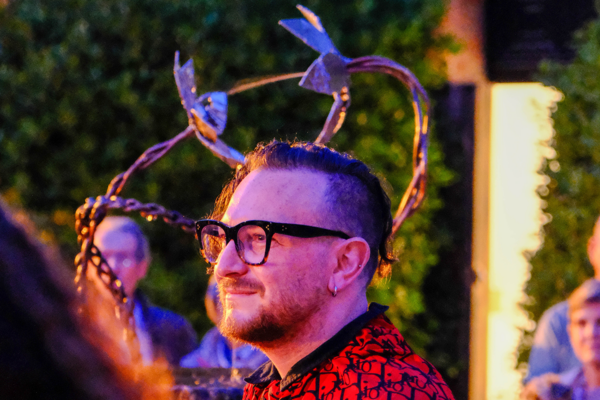
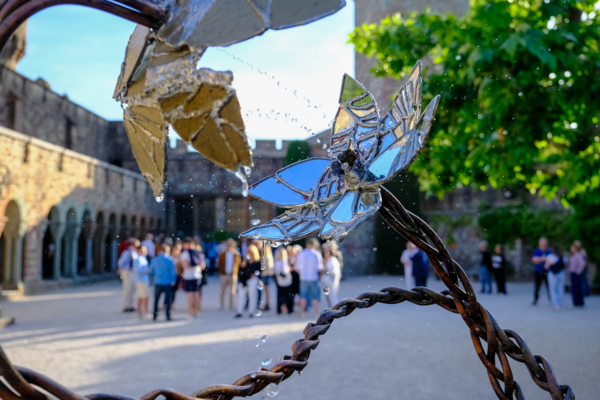
In the Château courtyard, Ry Van Der Hout presented several works created during the residency, including an installation integrated into the garden fountain.
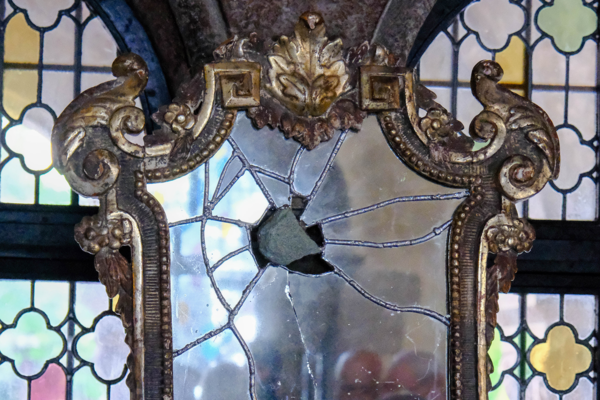
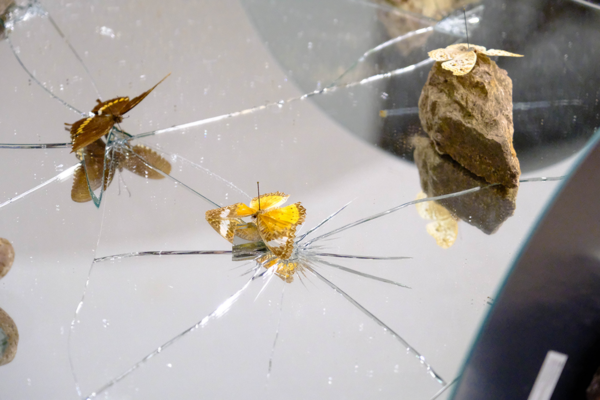
The artist notably works with antique mirrors recovered from the Château, which he fractures and recomposes through assembly and welding. Through these broken, reflective surfaces, his work explores notions of identity, transformation, and multiplicity.
Butterflies, volcanic stones, and fragments of glass entered into dialogue within compositions oscillating between delicacy and tension. In the evening light, the fountain installation revealed plays of reflection and fragmentation that extended the themes of transformation and recomposition present throughout his work.
Sarah Wendt & Pascal Dufaux: Fragile Architectures and Perceptual Experiences
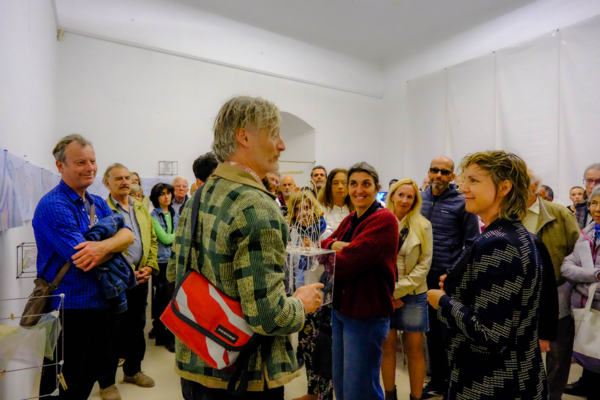
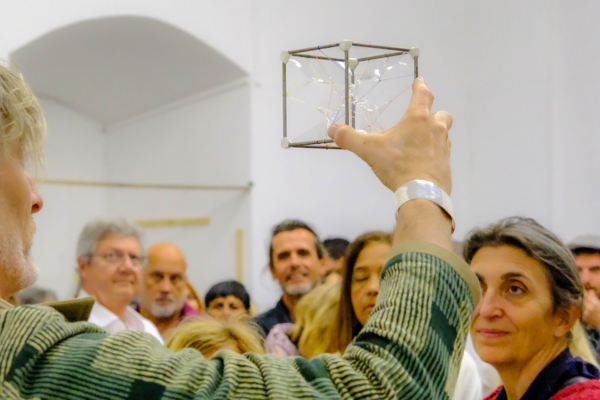
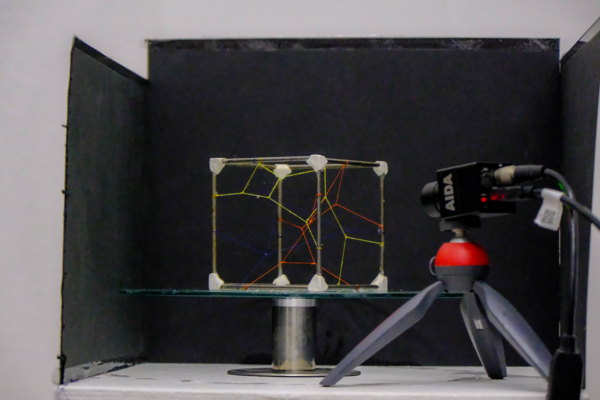
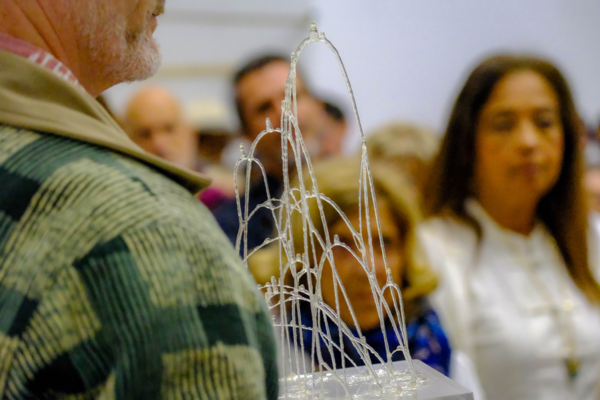
In one of the studios adjacent to the courtyard, the duo Sarah Wendt & Pascal Dufaux presented Fragile Apparitions, a project combining sculpture, performance, experimental architecture, and sensory research.
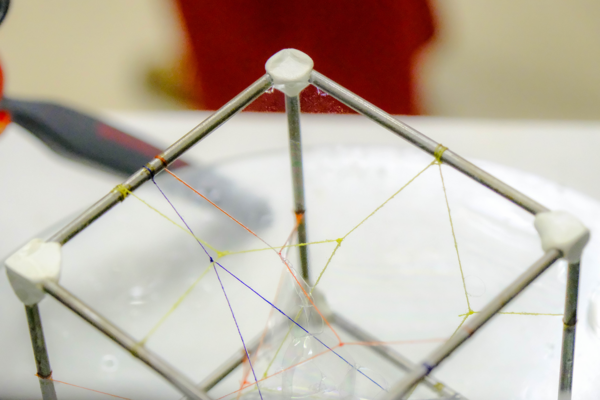
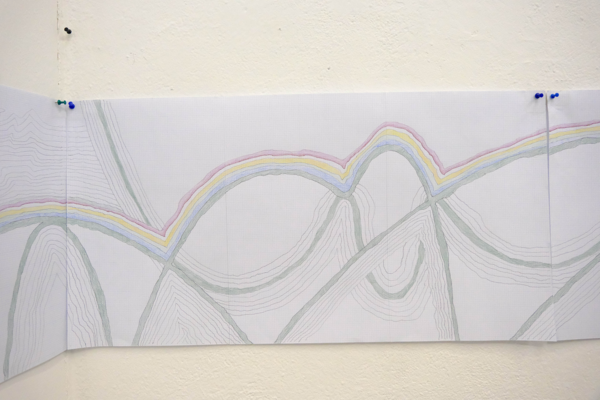
Their studio resembled both a scientific laboratory and a space for perceptual experimentation. Geometric structures, soap membranes, topographic drawings, and translucent sculptures formed a fragile and immersive environment.
At the core of their research are soap bubbles, approached as metaphors for the fragility of living beings. Through their physical properties — tension, transparency, instability, and disappearance — the duo explores how certain materials can generate sensitive experiences connected to the body, time, and our relationship to the environment.
A playful and hypnotic dimension that can resonate with both adults and children, while also carrying a broader reflection on ephemerality, vulnerability, and interdependence.
Karen Kraven: From Textile Drawing to Plant Forms
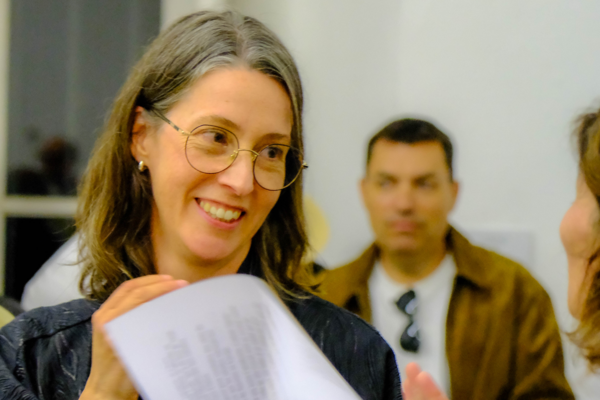
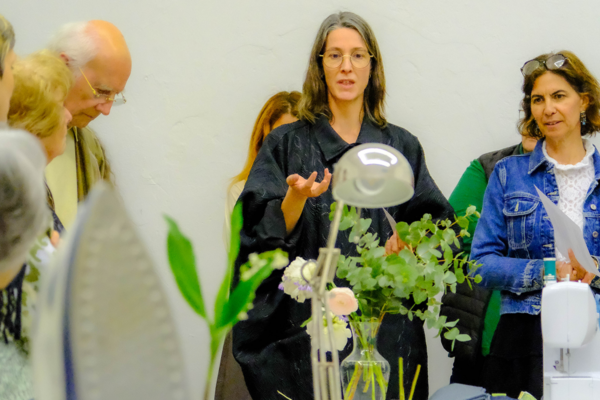
In the neighboring studio, Karen Kraven continued her research around textiles, drawing, and organic forms inspired by the plant world.
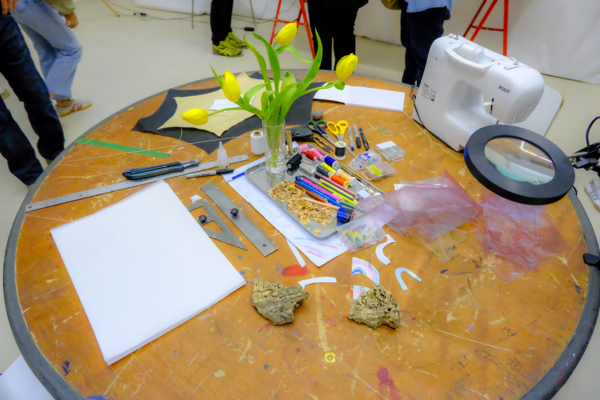
Her workspace took the form of an experimental sewing studio: open notebooks, fabric fragments, cut-out patterns, samples, abstract sketches, and herbarium specimens collected around the Château coexisted as elements of an ongoing research process.
Starting from drawings evoking petals, foliage, or floral structures, the artist explores how fabric can extend drawing into space. Several experiments hinted at the possibility of future wearable costumes situated somewhere between textile sculpture, garment, and performance.
Her research around plants collected near the Château also nourished a careful reflection on textures, natural forms, and the relationships between botany, textiles, and the body.
Andrew Boden: Archives, Fiction, and Historical Memory
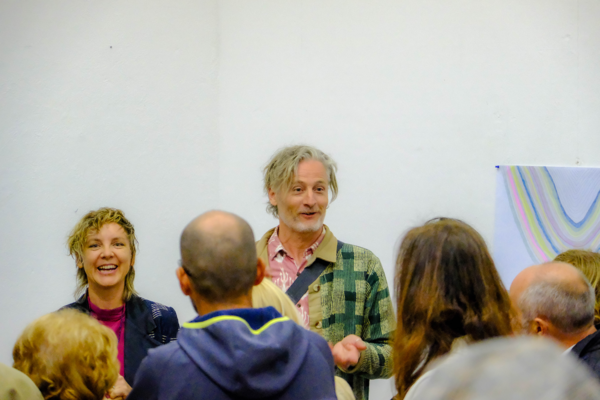
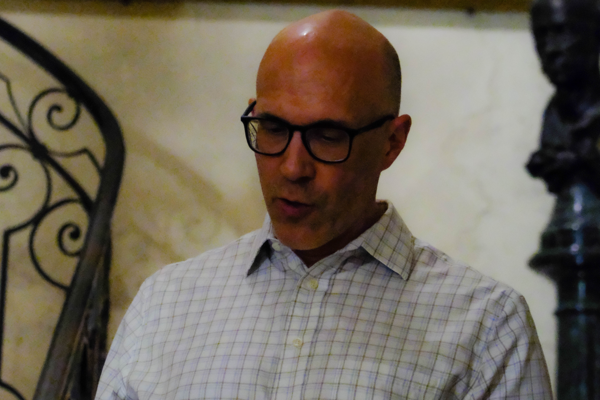
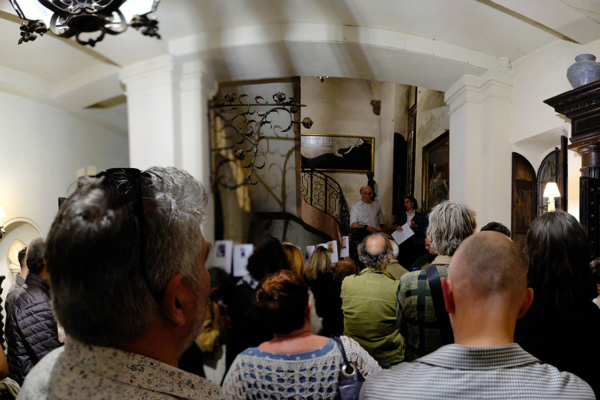
The studio visit ultimately concluded in the Château entrance hall, where Canadian author Andrew Boden presented the research connected to the historical novel he is currently writing.
Speaking to the audience gathered at the foot of the hall staircase, he introduced the historical context of his narrative: Spain in 1940, just after the Spanish Civil War. His novel follows Colleen Harris, a young Canadian woman searching for her missing brother, a former volunteer who fought alongside the Spanish Republicans and has now joined the Francoist camp.
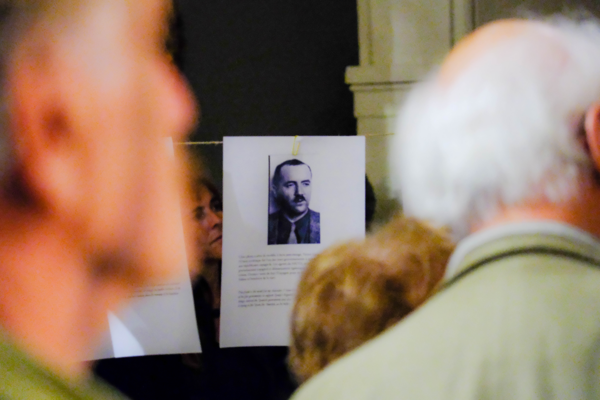
Around him were displayed various objects, images, and documents that nourished his writing process: archival photographs, Spanish propaganda posters, tarot cards, historical books, and portraits used as references for his characters.
Andrew Boden then read an excerpt from the manuscript written during his residency at La Napoule. This final stage of the Open Studio thus offered a more literary counterpoint to the previously visited studios.
Learn More About the Residencies
![[Icon]](https://www.lnaf.org/wp-content/uploads/2021/04/icon-footer-panel@2x.png)