
(6 October – 3 November, 2025)
Open Studio
Friday, 31 October
On October 31, 2025, the Château de La Napoule hosted the Open Studio of the Mirabello Family Residency. This international residency program is made possible thanks to the support of the Mirabello family and is organised in partnership with the Embassy of France in India, the French Institute in India and Villa Swagatam. Fully aligned with the mission of La Napoule Art Foundation, the residency offers artists a context that fosters research, experimentation and intercultural dialogue. More than one hundred visitors attended this public opening, introduced by the Château’s director. The evening highlighted the core aims of the residency: supporting emerging and established practices, enabling the production of new work, and encouraging the circulation of ideas across disciplines and geographies.
Villa Marguerite: first presentations
The evening began at Villa Marguerite with artist Tabitha Soren, who presented a selection of works in progress. Her practice examines the materiality of the photographic image through manual interventions – burning, painting, superimposition – which operate as deliberate disruptions of the medium. Her textile research around the series Madonna and Child opens a reflection on the status of images as they move from the digital realm to fabric, and on the symbolic rewritings made possible by embroidery.
In the neighbouring studio, writer and audio producer Erin Anderson offered an immersive listening of an excerpt from Cement City, her award-winning documentary podcast focused on the post-industrial town of Donora, Pennsylvania. The listening session, accompanied by on-site photographs, revealed both the political and human scope of her documentary approach. Combining investigation with sonic ethnography, her work probes how local narratives mirror the broader fractures running through contemporary American society.
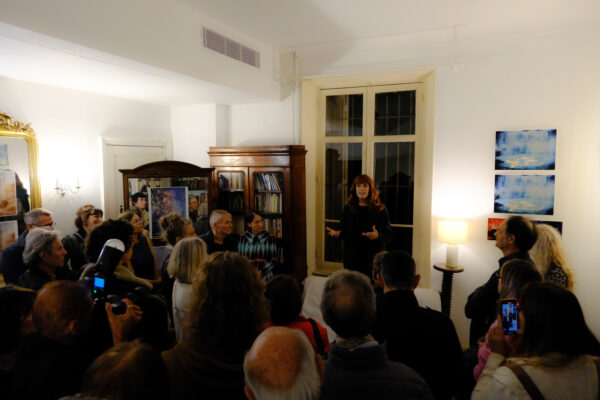
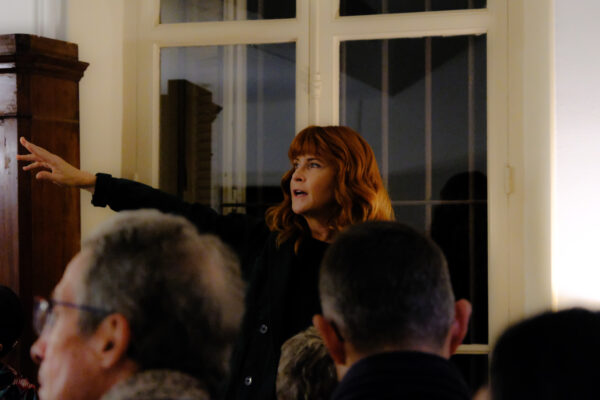
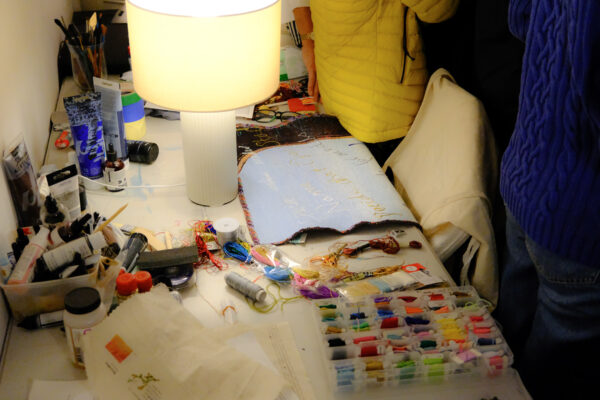
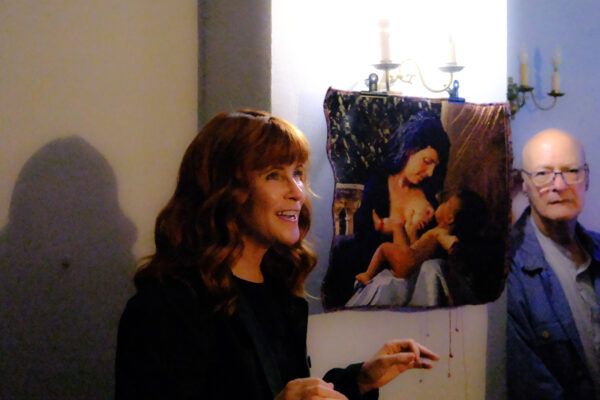
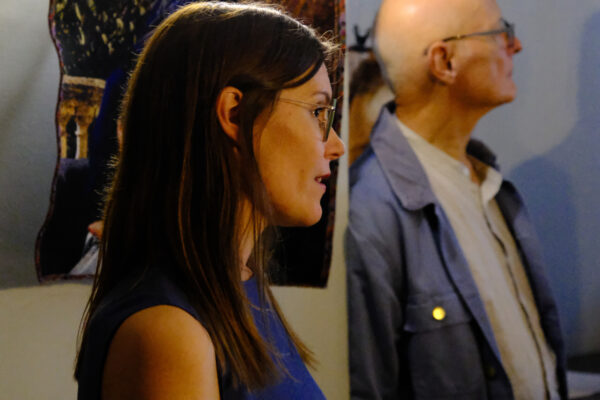
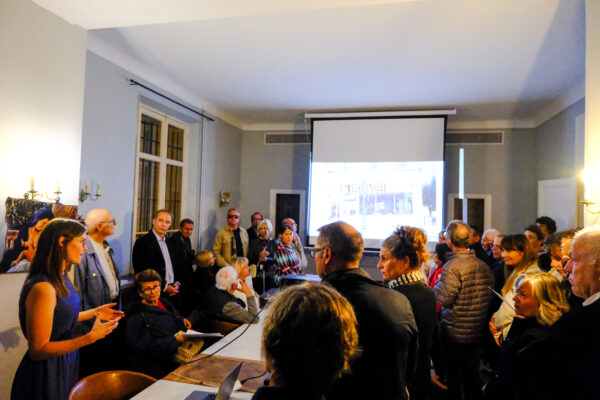
Villa Marguerite — Studios of Tabitha Soren & Erin Anderson
Château studios: practices, narratives and materials
In the Tower of the Tombs, Sajid Wajid Shaikh presented a body of experiments spanning drawing, ceramics, painting and installation. Inspired by Henry Clews’s symbolist imagery and sculpted bestiary, he develops an intuitive approach to gesture grounded in presence and in listening to the site. Some works incorporate anti-bird devices found on the estate and diverted as sculptural elements, opening a critical reflection on violence, peace and the representation of conflict.
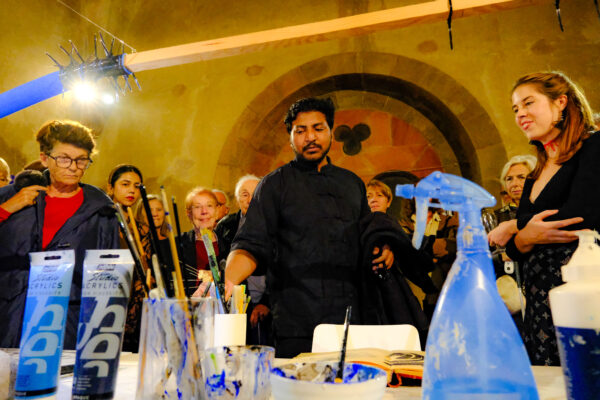
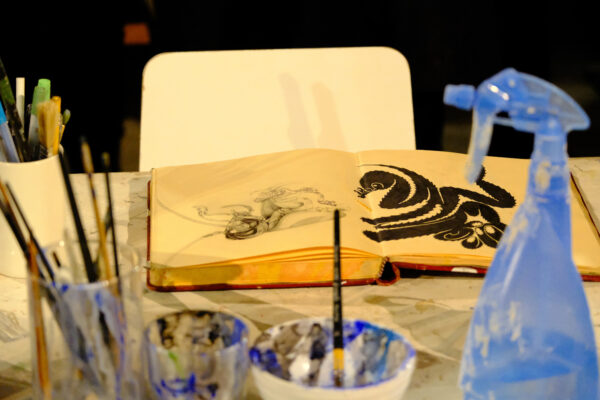
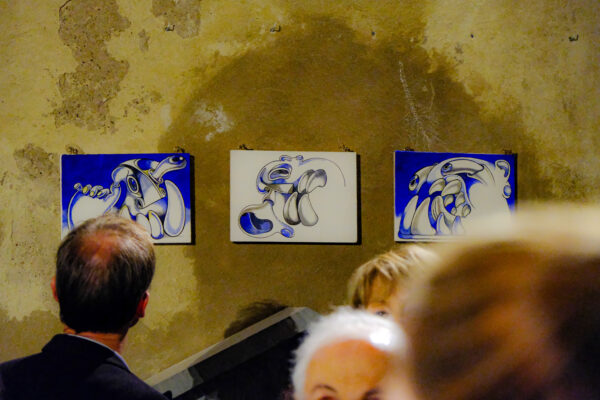
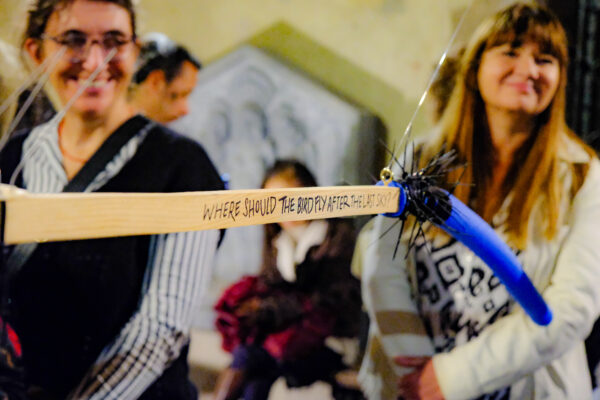
Studio — Sajid Wajid Shaikh
Karina Akopyan presented research centred on Elizabethan dress codes and the figure of Henry VIII. Between illustration and garment-sculpture, the artist examines mechanisms of power, gender identities and the performative dimension of costume. Her experiments with latex – approached as a writing or projection surface – address the body as interface.
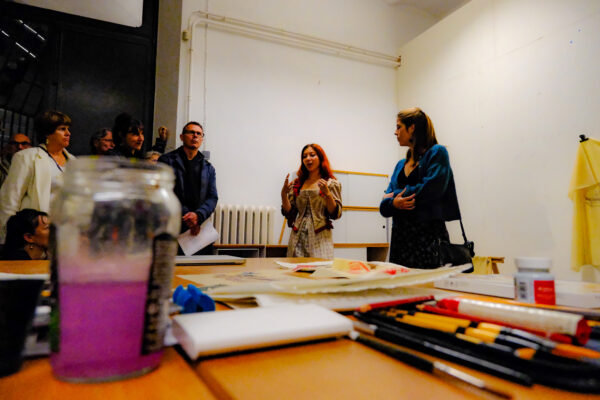
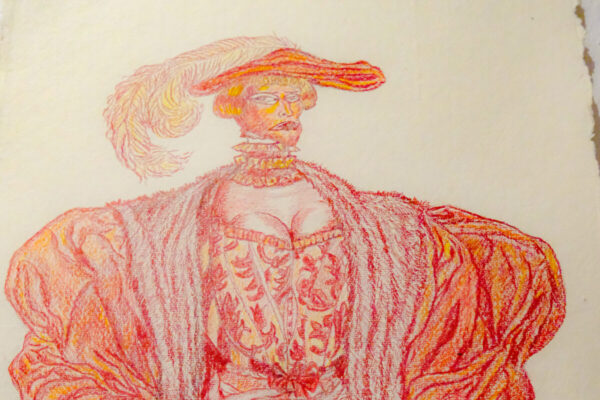
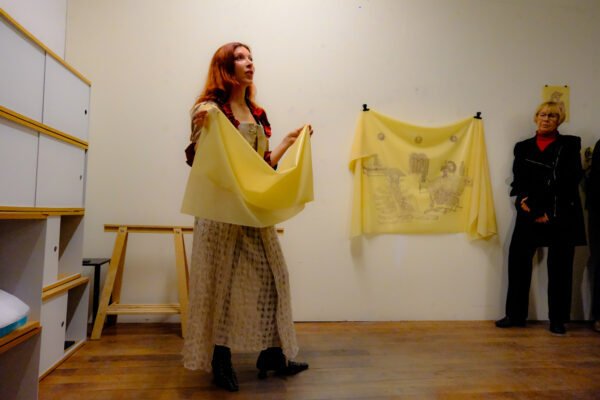
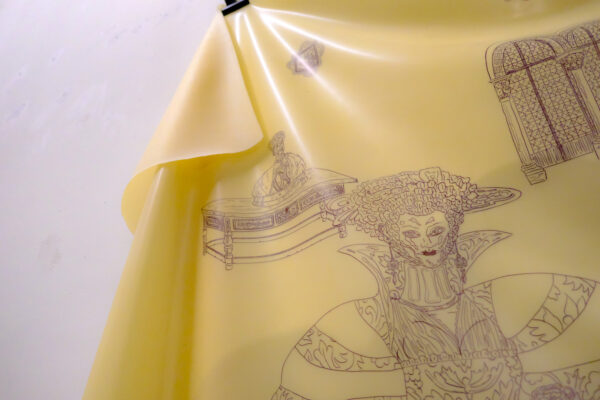
Studio — Karina Akopyan
Writer Garance Meillon then read an excerpt from her novel La Langue de l’ennemi (Gallimard, 2023), laureate of the Fondation des Treilles and Villa Marguerite Yourcenar, and shortlisted for the Prix Honoré-de-Balzac. The book depicts the progressive hold of professional language on a couple’s private sphere, showing how normative discourse can, often unconsciously, shape our relationships and our way of inhabiting the world. Her precise and sensitive reading offered a moment of reflection within the evening’s itinerary.
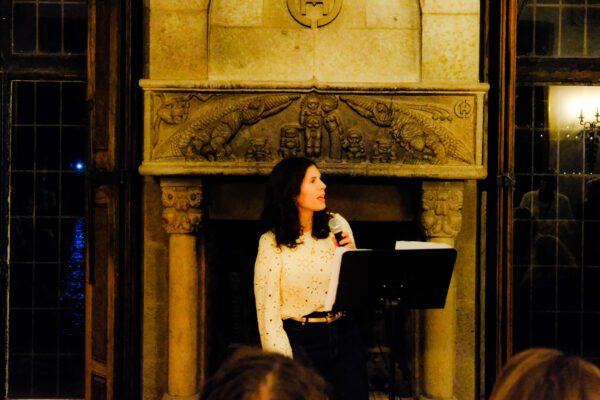
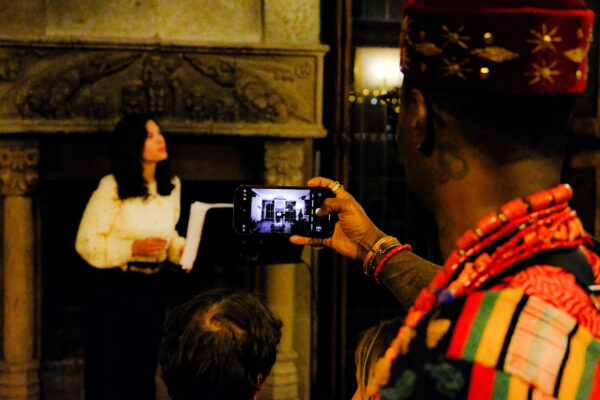
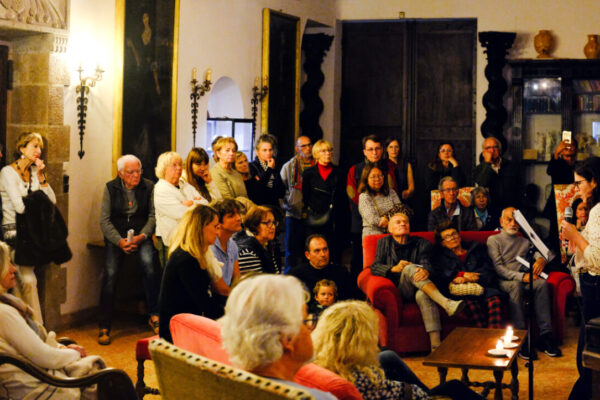
Reading — Garance Meillon
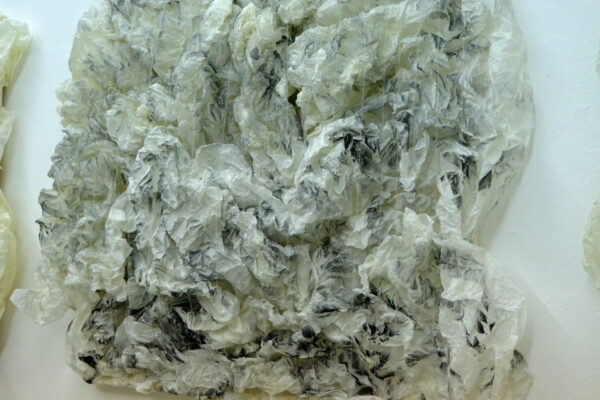
In her studio, visual artist Agathe Roger presented a series of pieces made from tissue paper worked with natural materials: coffee, pigments, wool. Through subtle yet radical transformations of the surface, she produces forms that evoke both the mineral and the organic, questioning fragility and persistence.
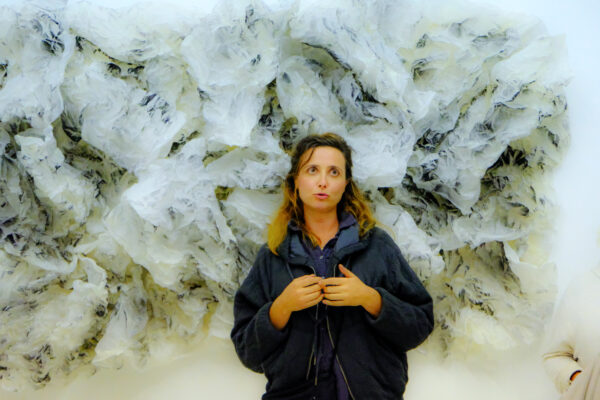
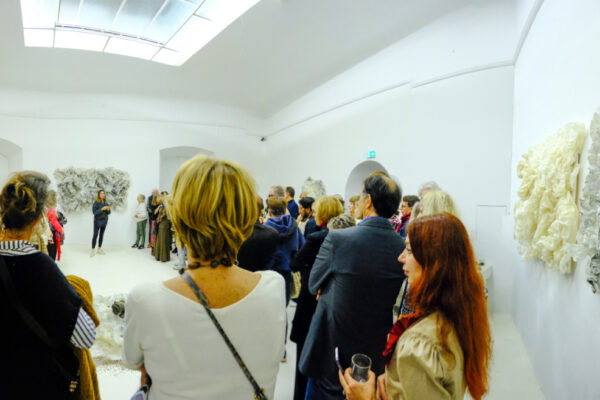
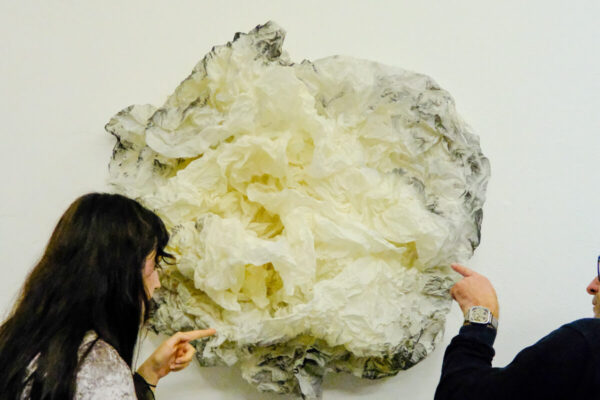
Studio — Agathe Roger
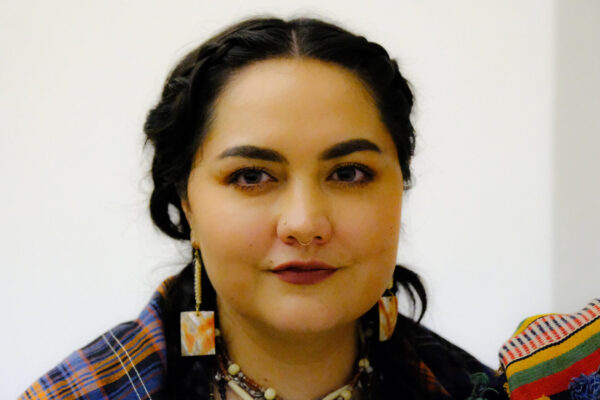
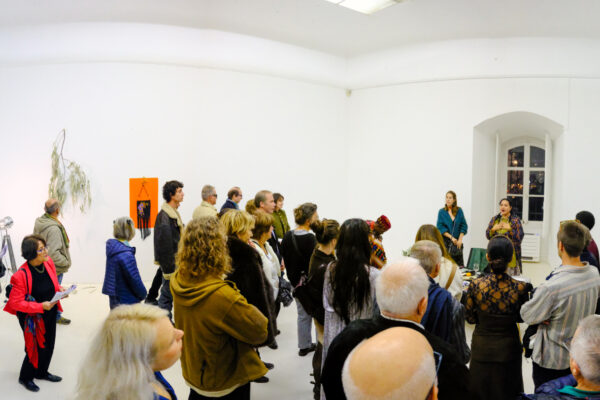
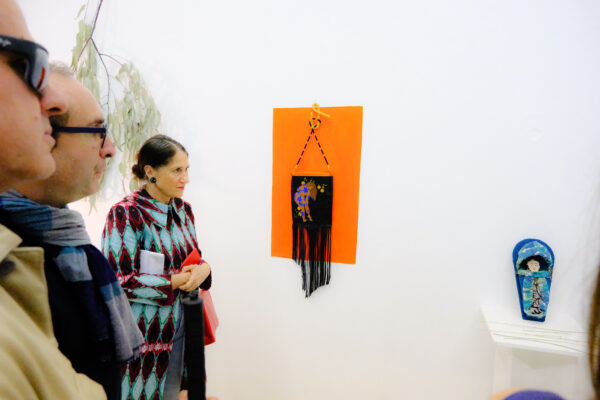
In the adjacent studio, Chelsea Kaiah James presented works combining Indigenous traditions and local inspirations: beadwork, olive branches, eucalyptus leaves. A sensitive dialogue between the memory of her Ute and Apache heritage and the surrounding Mediterranean landscape.
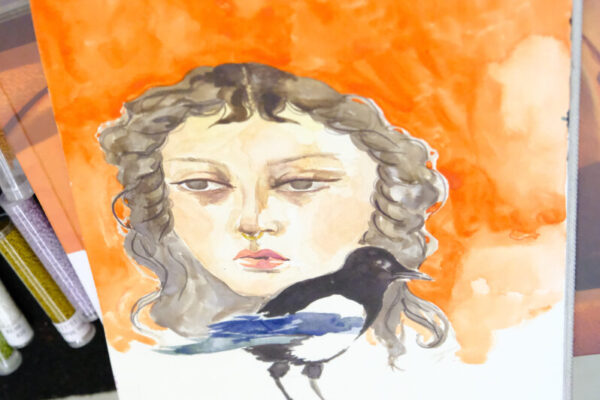
Studio — Chelsea Kaiah James
Innä Morales proposed a participatory work inviting visitors to reflect on bodily memory and intergenerational feminine transmission: guests were invited to answer a series of poetic questions (“What gaze taught you to see yourself differently?”, “What gesture from another woman still lives in your body?”). The responses, placed in ceramic boxes made by the artist, formed a sensitive, collective corpus.
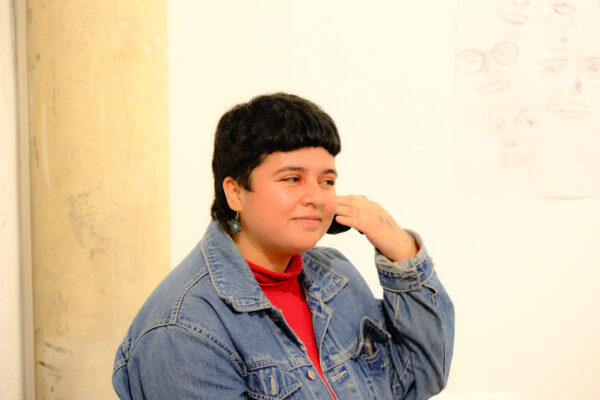
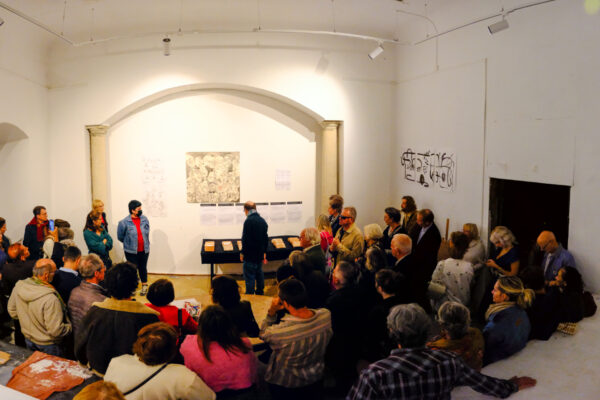
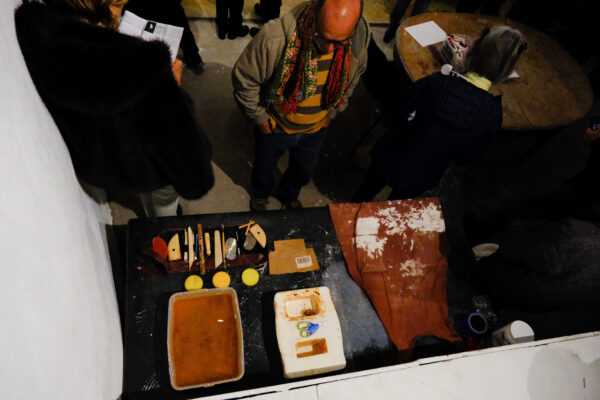
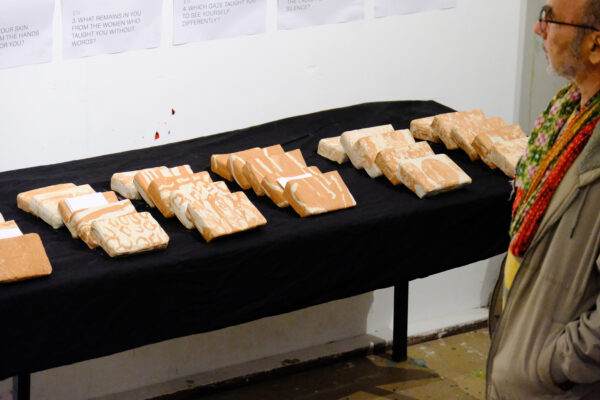
Participatory installation — Innä Morales
Finally, the visit concluded in the studio of Dr. Ietef “DJ Cavem” Vita, a pioneer of eco hip-hop and an initiated priest of the Ifa tradition. His installation, Orisa Graffiti & the Sacred Language of the Streets, transformed the studio walls into symbolic altars, where each colour became a vibration and each motif a prayer. At the crossroads of graffiti, ritual and hip-hop culture, his work fuses urban calligraphy with the spiritual codes of the Orishas, weaving a dialogue between earth, art and divinity. Influenced by his time in Nigeria and by figures from the contemporary graffiti scene, he conceives creation as an act of memory and healing. The artist also invited the public to take part in a ritual honouring the ancestors, underscoring the profoundly spiritual and communal dimension of his approach.
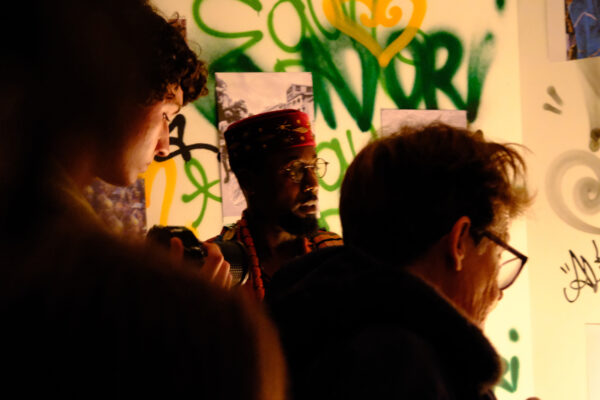
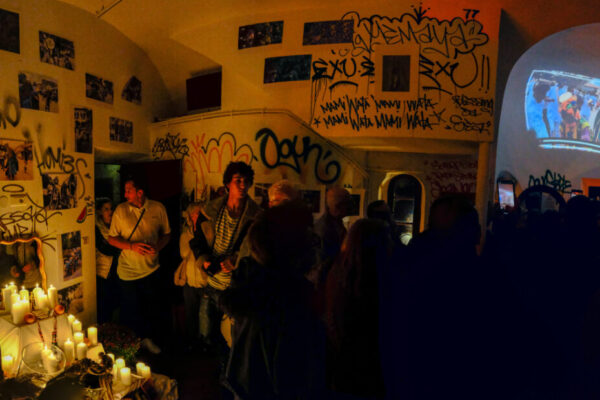
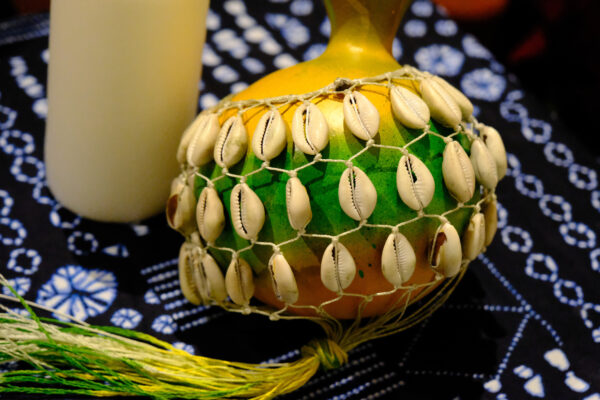
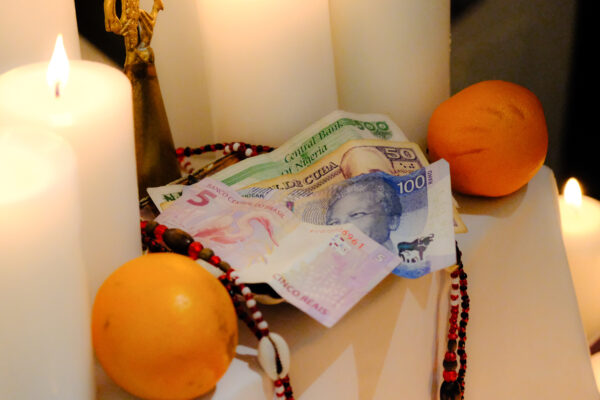
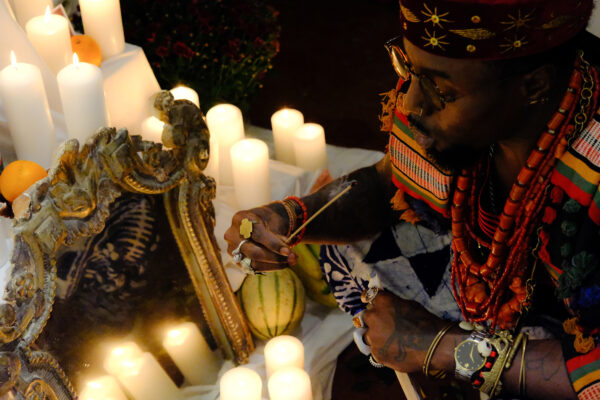
Studio — Dr. Ietef “DJ Cavem” Vita
A shared closing moment
The evening ended with a convivial gathering of artists, visitors and the Foundation team. Audience feedback highlighted the quality of the practices on view, the diversity of approaches and the relevance of the research conducted during the residency. This Open Studio reaffirms the Château de La Napoule’s commitment to supporting international artistic trajectories and practices engaged with contemporary issues, by providing a context conducive to experimentation, critical reflection and creation.
![[Icon]](https://www.lnaf.org/wp-content/uploads/2021/04/icon-footer-panel@2x.png)